

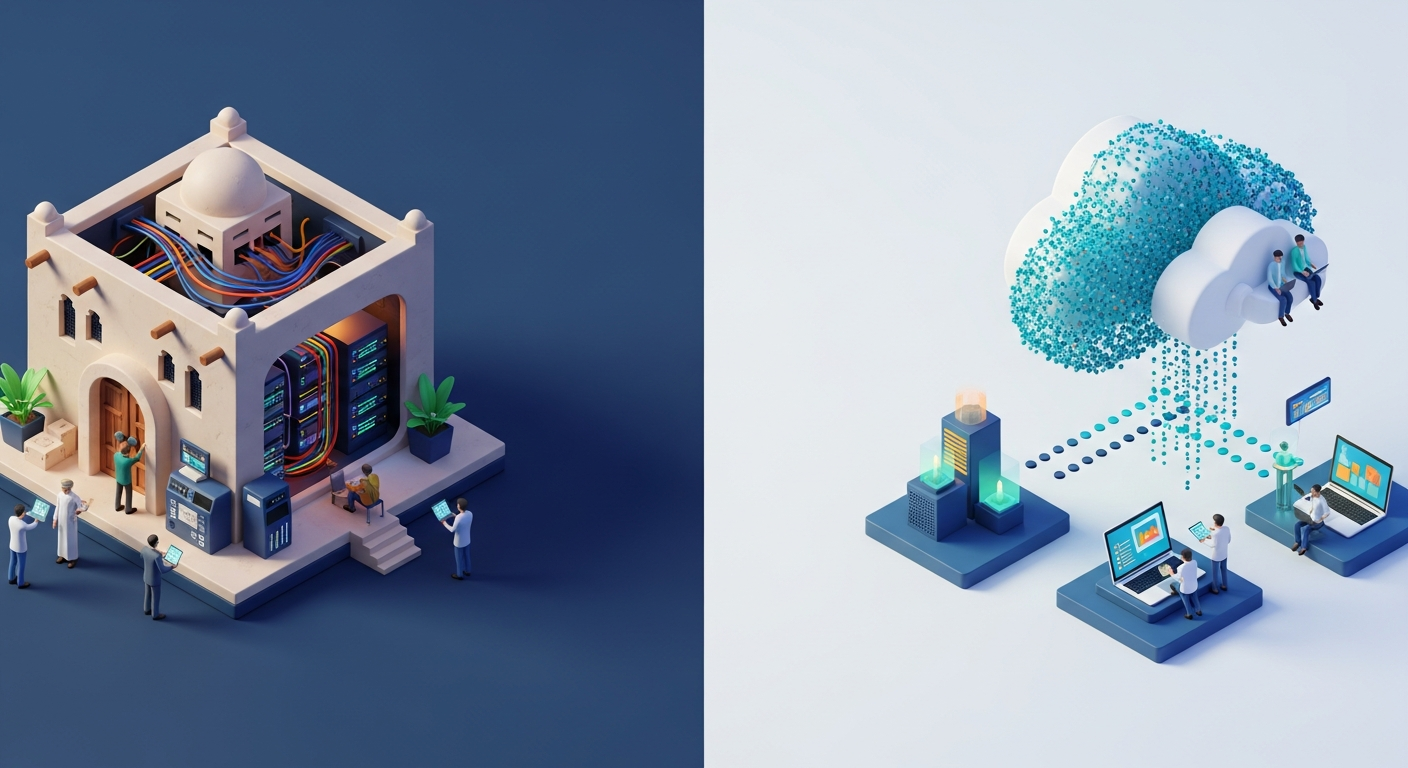
Cloud-Based vs On-Premise Software: A Simple Comparison for Oman Businesses
If you are considering new software for your business, one of the first decisions you will face is whether to go with cloud-based or on-premise software. Both approaches have been around for a while, but the way businesses in Oman are thinking about this choice is shifting fast.
Cloud-based software runs on remote servers and is accessed over the internet. On-premise software is installed and runs on your own computers and servers, right there in your office or data center. The differences between them affect your costs, your flexibility, your security, and how your team works day to day.
In this article, we will compare both options in simple terms so you can make the right decision for your business. If you are still exploring the full development journey, our overview of the software development process gives you helpful context.
How Cloud-Based Software Works
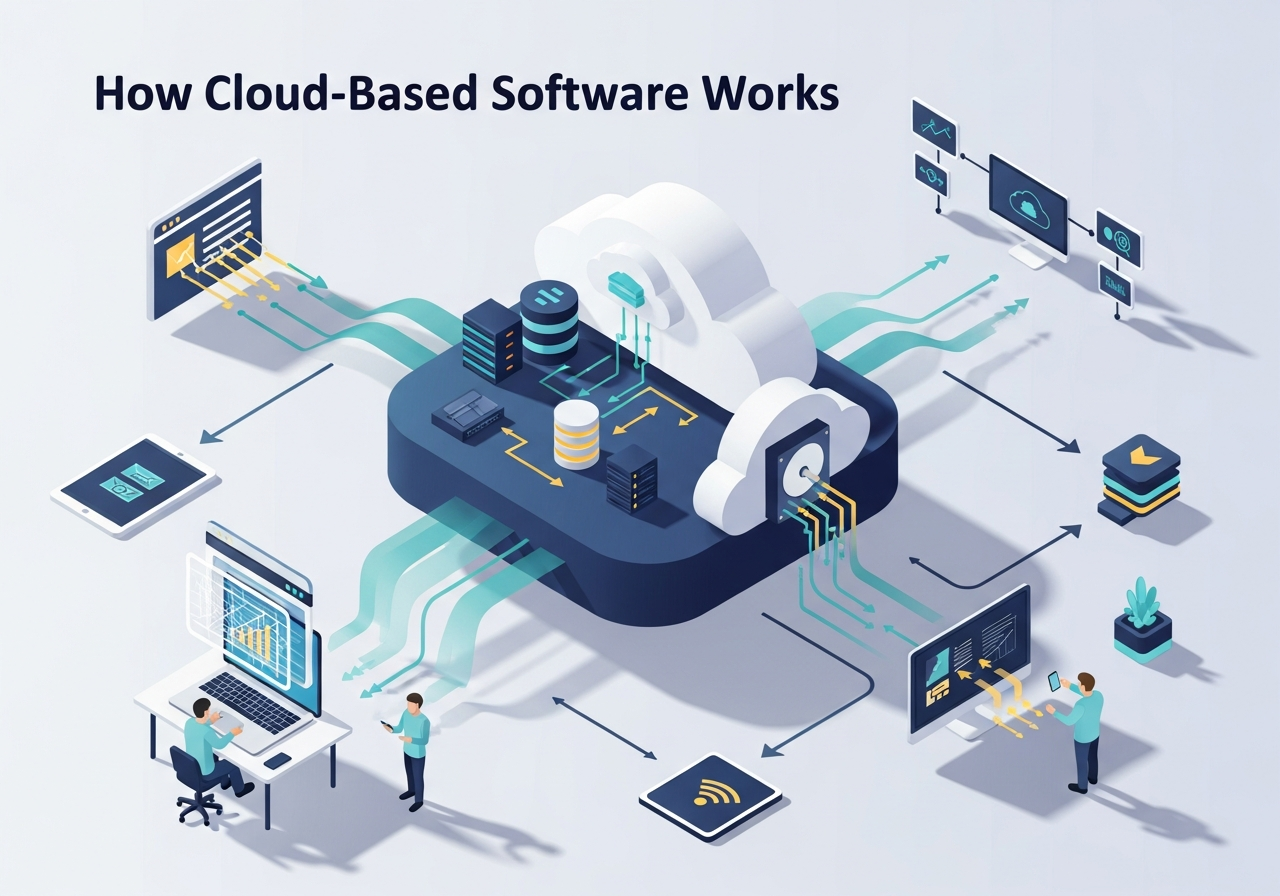
Cloud software is hosted on servers managed by a third-party provider or your own cloud infrastructure. Your team accesses it through a web browser or a lightweight app. All the heavy lifting, including data storage, processing, and security updates, happens on the provider’s servers.
Popular examples of cloud platforms include Google Workspace, Salesforce, and most modern SaaS products. But cloud software does not have to be an off-the-shelf product. You can build a completely custom application and host it on cloud infrastructure like Amazon Web Services, Google Cloud, or Microsoft Azure.
Benefits of the Cloud
- Lower upfront costs: No need to buy and maintain expensive servers. You pay a monthly or annual fee based on usage.
- Access from anywhere: Your team can work from the office, from home, or on the road. All they need is an internet connection.
- Automatic updates: The provider handles software updates, security patches, and backups so your team does not have to.
- Easy to scale: Need more storage or processing power? Cloud platforms let you scale up (or down) without buying new hardware.
Challenges of the Cloud
The most common concern is data control. When your data lives on someone else’s servers, you are trusting that provider with your most sensitive information. For businesses in regulated industries, this can raise compliance questions.
Internet dependency is another consideration. If your connection goes down, cloud software becomes inaccessible. This is less of an issue in urban areas like Muscat, but it can be a factor for businesses in more remote locations.
How On-Premise Software Works
On-premise software is installed directly on your company’s own servers and computers. Your IT team manages everything, including the hardware, the software, updates, backups, and security.
Benefits of On-Premise
- Full data control: Your data stays on your own servers. You decide where it is stored and who has access.
- No internet dependency: The software works even when your internet is down, which can be critical for certain operations.
- One-time licensing: Some on-premise solutions use a one-time purchase model instead of ongoing subscriptions, which can be more cost-effective over many years.
- Customization: You have complete control over the environment, which allows for deeper customization and integration with internal systems.
Challenges of On-Premise
The biggest drawback is cost and responsibility. You need to buy servers, maintain them, handle backups, apply security patches, and manage upgrades yourself (or hire IT staff to do it). This is a significant ongoing commitment.
Scaling is also harder. If your business grows and you need more capacity, you need to purchase and set up additional hardware, which takes time and money.
Which Option Is Right for Your Business?
The right answer depends on your priorities. Here is a simple way to think about it.
Choose cloud if you want lower upfront costs, remote access for your team, and do not want to manage your own IT infrastructure. Cloud works especially well for growing businesses that need flexibility and want to avoid large capital investments.
Choose on-premise if you have strict data residency requirements, need the software to work without internet, or have an existing IT team capable of managing the infrastructure. Some industries, especially in healthcare, finance, and government, may require on-premise deployments for compliance reasons.
Consider a hybrid approach if you need the best of both worlds. Many businesses run their most sensitive systems on-premise while using cloud services for collaboration, communication, and less sensitive workloads.
The Trend in Oman
More businesses in Oman are moving toward cloud solutions, driven by lower costs, government digitization initiatives, and the growing availability of reliable internet infrastructure. However, on-premise solutions remain important in industries where data sovereignty and offline access are non-negotiable.
The key is choosing a development partner who understands both approaches and can recommend the right architecture for your specific needs. Building software that is designed for scalability from the start ensures you can adapt as your needs change, regardless of which hosting model you choose.
Whether you go cloud, on-premise, or hybrid, what matters most is that the software is built well and supported properly. If you need guidance on keeping your business software secure regardless of where it is hosted, we cover that in a dedicated article.
Masirat Technology builds custom software that works wherever your business needs it. Whether your project calls for a cloud deployment, an on-premise setup, or a mix of both, we design solutions that fit. We are a software development company in Oman that also supports businesses with SEO strategies, web development, and specialized products like Pharmasolo pharmacy management software.


