Choosing the right platform for a website has a long-term impact on performance, scalability, and search visibility. While WordPress and no-code platforms work well for many small and medium projects, they are not always the best fit for businesses with advanced technical or SEO requirements.
As websites grow in complexity, traffic volume, and data demands, limitations begin to surface. Extra code, plugin dependencies, and restricted architectural control can quietly affect site speed, crawl efficiency, and overall user experience.
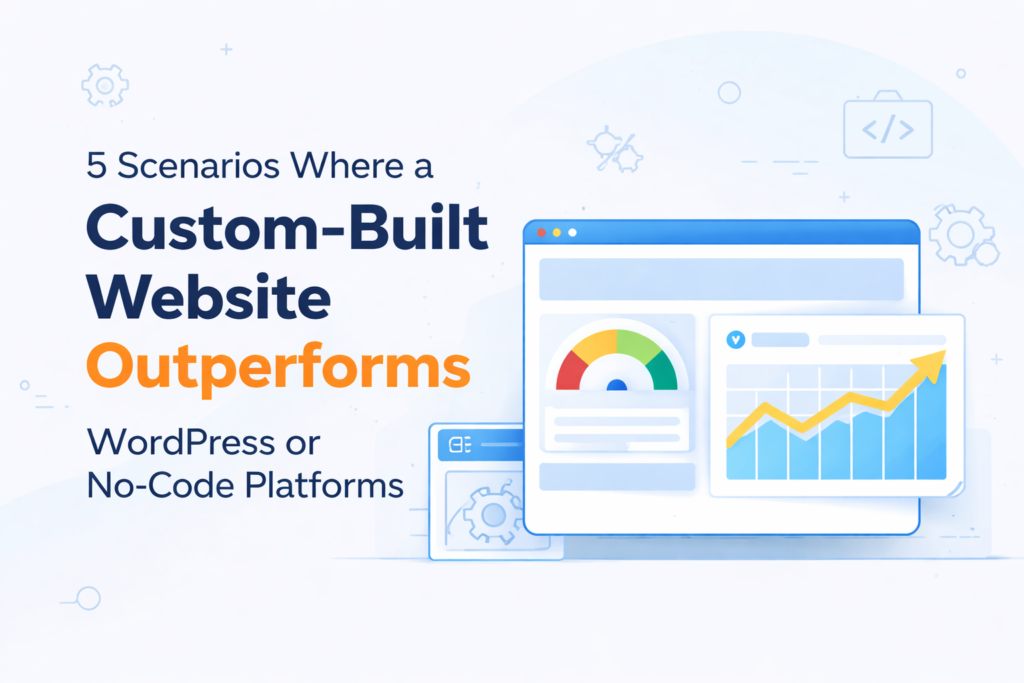
This article explores five specific scenarios where custom-built websites consistently outperform WordPress and no-code platforms. Each scenario is supported by insights from development and SEO experts who have worked through these challenges in real-world projects.
About This Article
This article is curated and reviewed by professionals with hands-on experience in custom web development, technical SEO, and performance optimization. It features insights from SEO strategists, agency leaders, and developers who have built and migrated large-scale websites across SaaS, B2B, and data-driven industries.
The perspectives shared here are based on real implementation work, not theoretical comparisons. Each expert has evaluated WordPress, no-code platforms, and custom builds under production-level demands.
When Custom Development Becomes a Strategic Advantage
WordPress and no-code tools are designed for speed of deployment. Custom development is designed for precision.
The difference becomes clear when performance, crawl control, and scalability are no longer optional improvements but business-critical requirements. The following scenarios highlight where custom-built websites provide measurable advantages.
The 5 Scenarios Where Custom Builds Pull Ahead
Maximize Speed to Accelerate SaaS Growth
For me, a clear case is a content-heavy SaaS site that needs to scale fast — think hundreds of blog posts, guides, docs, and product pages, with global traffic.
On WordPress or most no-code tools, you start with a lot of extra code you don’t need: theme frameworks, page builders, plugin scripts, and third-party widgets. Even when you clean it up, you’re still shipping more CSS and JavaScript than the site needs. That slows down key speed metrics like Largest Contentful Paint (how fast the main content shows) and hurts Core Web Vitals, which flow into SEO. It also makes pages feel sluggish, which increases bounce rate and lowers conversions.
With a custom build, you design the stack around the content and the user journeys. You only load the scripts and styles a page needs, you control image formats and compression from the start, and you can set up caching and CDNs in a way that fits how people browse the site. That makes it easier to keep load times low even when traffic spikes or when you have many templates.
On the SEO side, a custom build lets you bake in things like clean URLs, schema, internal linking patterns, language tags, and XML sitemaps at the framework level. You’re not relying on a mix of plugins that may clash or get slower with each update. Over a few years, that lower technical debt matters more than most people think.
So when there’s a big content footprint and performance is tied to revenue — common in SaaS and high-intent B2B — I’ve seen custom sites outpace WordPress/no-code on both rankings and engagement because speed and technical SEO aren’t bolted on; they’re part of the core architecture.
Josiah Roche, Fractional CMO, JRR Marketing
Drive Long-Term Gains Through Lean Architecture
This is one apparent area where a custom-designed website will always outperform WordPress or no-code websites and that is content-intensive, search engine-driven sites competing in a high-intent or crowded search environment.
This is primarily due to performance and crawl efficiency. Custom builds enable teams to remove unnecessary JavaScript, plugins, and render-blocking assets common in WordPress or no-code stacks. Pages load faster, particularly on mobile, which improves Core Web Vitals and directly impacts rankings and conversions.
SEO-wise, custom sites allow cleaner URLs, scalable internal linking logic, and programmatic SEO without platform limitations. Content hierarchy, schema, and crawl depth can be built correctly from the start instead of patched later.
An anonymized example involved migrating a heavily customized WordPress B2B services site to a lightweight custom build. Page load time dropped by more than 60 percent, and organic traffic grew by 35 percent within four months due to improved indexing and rankings.
WordPress and no-code tools are fast to deploy, but when SEO is a long-term growth engine, custom architecture offers sustainable advantages.
Atif Latif, SEO Marketer, Rankviz
Engineer Bespoke Apps Amid Extreme Demands
In my experience, a custom-built website unequivocally outperforms WordPress or no-code platforms when the project demands a highly complex, data-intensive web application with bespoke functionalities and extreme scalability requirements.
Consider a real-time financial analytics dashboard or a specialized SaaS platform with unique user interactions and massive data processing needs. WordPress relies heavily on plugins and generic database structures, which introduce performance bottlenecks. No-code tools deploy quickly but often hit limitations when deeper customization is required.
A custom build allows for purpose-built performance, granular SEO control, and scalable, secure architecture designed specifically for the application’s needs.
Amir Husen, Content Writer, SEO Specialist & Associate, ICS Legal
Build at Scale with Crawl Control
In my experience, a custom-built website consistently outperforms WordPress or no-code platforms when managing large, dynamic sites that require strict control over performance and crawl behavior.
With WordPress and no-code platforms, abstraction layers introduce plugin bloat and markup limitations. Even aggressive optimization still means working against the platform. Custom builds allow full control over HTML output, server-side rendering, and internal linking logic.
The biggest SEO benefit comes from intentional architecture. Pagination, faceted navigation, and URL structures can be designed specifically for search engines rather than fixed editor workflows.
When scale, performance, and SEO are strategic priorities, custom development becomes a competitive advantage.
Sovic Chakrabarti, Director, Icy Tales
Power Data Portals via Programmatic SEO
A situation where custom development consistently outperforms platform-based solutions is high-traffic data aggregation websites such as real estate portals pulling data from multiple feeds.
WordPress or no-code tools rely on multiple plugins for mapping, filtering, and data display, creating code bloat and database bottlenecks that slow performance and hurt Core Web Vitals.
From an SEO perspective, programmatic optimization of thousands of pages requires precise control over templates, metadata, and indexing logic. Custom development enables this level of scalability without compromise.
Kuldeep Kundal, Founder & CEO, CISIN
Why These Insights Are Trustworthy
The insights in this article are drawn from real-world development and SEO projects involving SaaS platforms, B2B services, editorial websites, and large-scale data portals. Each contributor has worked directly with production environments where performance, crawl efficiency, and scalability directly affect revenue and growth.
These scenarios reflect current challenges and solutions rather than hypothetical comparisons.
Final Thoughts: Custom Development Is About Control, Not Complexity
Custom-built websites are not always the right choice. For many projects, WordPress or no-code platforms are efficient and cost-effective.
However, when performance, SEO, and scalability become strategic priorities, custom development provides the control needed to build sustainable growth. In these scenarios, the benefits compound over time, making custom architecture a long-term investment rather than an upfront cost.
Editorial Disclosure
Expert opinions featured in this article are based on individual professional experience and do not represent a single universal methodology. The content is intended for educational purposes and reflects current best practices at the time of publication.

Adil Rafeeque is a digital marketing professional . He specializes in performance marketing, SEO, Web development and content strategy, helping businesses grow through smart, data-driven campaigns and engaging content.