


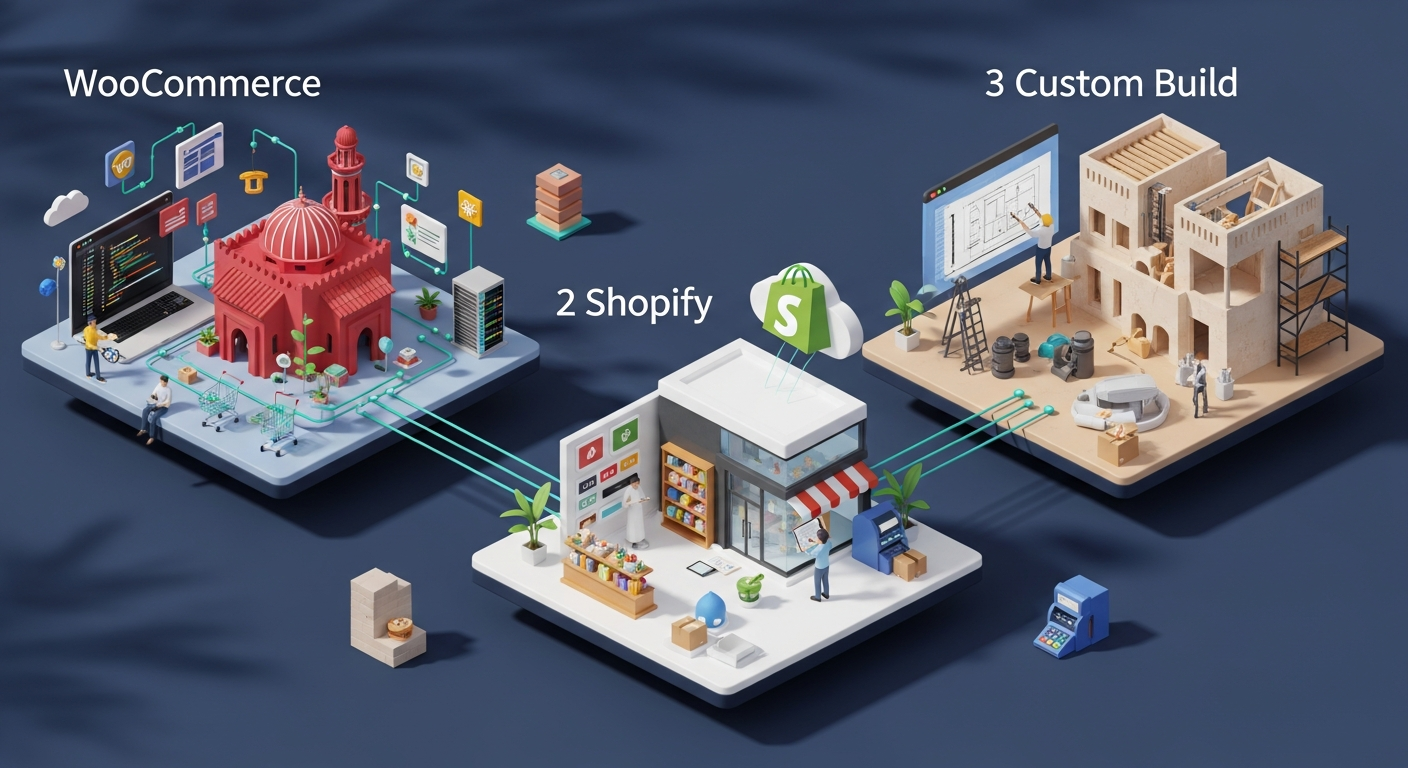
WooCommerce vs Shopify vs Custom Build: Which Is Right for Your Oman Business?
Choosing the right platform for your online store is one of the most important decisions you will make. The three most popular options for businesses in Oman are WooCommerce, Shopify, and custom-built platforms. Each one has real strengths, and the best choice depends on your budget, your technical comfort level, and how much flexibility you need.
This is not a “one platform rules them all” situation. A startup selling handmade candles has very different needs than a multi-branch retailer with thousands of products and complex inventory. Let us break down each option so you can make an informed decision.
WooCommerce: The Flexible, Budget-Friendly Option
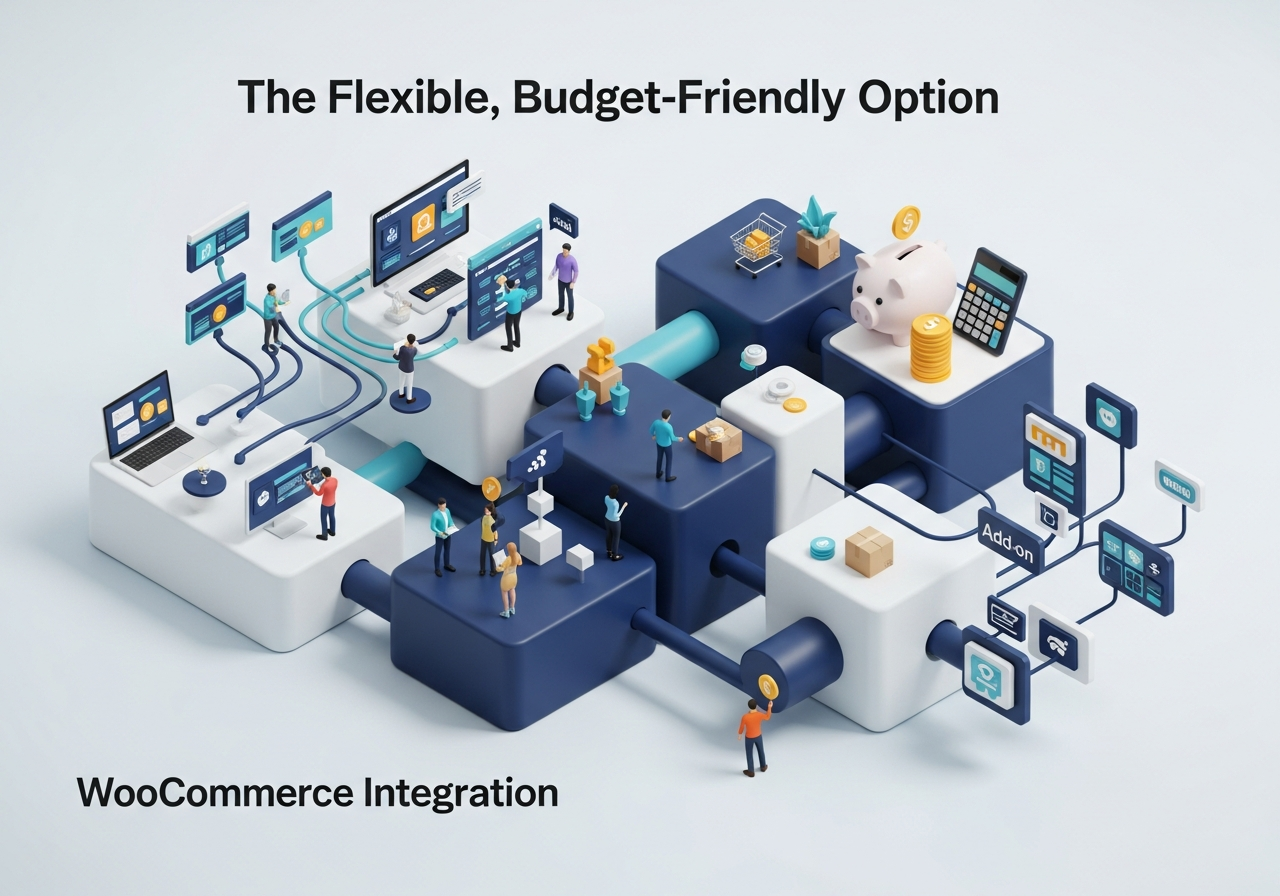
WooCommerce is a free plugin that turns any WordPress website into an online store. It is the most widely used e-commerce platform in the world, and for good reason.
What Makes WooCommerce Great
The biggest advantage is flexibility. Since WooCommerce is open-source, you have complete control over your store. You can customize the design, add any feature through plugins, and integrate with local payment gateways used in Oman. There are no monthly platform fees beyond your hosting costs.
WooCommerce also benefits from the enormous WordPress ecosystem. Thousands of themes, plugins, and developers are available, making it easy to find solutions for almost any requirement.
Where WooCommerce Falls Short
You are responsible for hosting, security, and updates. Unlike Shopify, WooCommerce does not handle these for you. You need either technical knowledge or a reliable web development partner to keep everything running smoothly.
Performance can also be a concern with WooCommerce if you add too many plugins or choose a slow hosting provider. Our guide on website performance optimization covers how to avoid these issues.
Shopify: The Easy, All-in-One Solution
Shopify is a hosted platform that lets you set up an online store without touching any code. You pay a monthly subscription, and Shopify handles hosting, security, updates, and technical maintenance.
What Makes Shopify Great
Speed of setup is Shopify’s biggest selling point. You can have a store live within a day. The interface is intuitive, and most features you need for a basic to mid-range store are built in.
Shopify also has its own payment processing system and integrates with many third-party gateways. For businesses that want to focus on selling rather than managing technology, it is a compelling choice.
Where Shopify Falls Short
Customization is limited compared to WooCommerce or a custom build. You can only customize within the boundaries Shopify allows. For businesses with unique workflows or complex product configurations, these boundaries can become frustrating.
The cost also adds up. Monthly fees, transaction fees (if you do not use Shopify Payments), and premium app costs can make Shopify more expensive than WooCommerce over time.
Custom-Built: Full Control, Maximum Investment
A custom e-commerce platform is built from the ground up specifically for your business. It uses technologies like React, Node.js, or Python to create a store that does exactly what you need.
What Makes Custom Great
There are no compromises on design, features, or functionality. Everything is tailored to your business. Custom builds excel when you have complex requirements, such as multi-vendor marketplaces, advanced inventory systems, or deep integrations with enterprise software.
You also own the code entirely. There is no vendor lock-in and no risk of a platform changing its pricing or features in ways that hurt your business. Our article on when custom-built websites outperform templates dives deeper into this advantage.
Where Custom Falls Short
Cost and timeline are the main drawbacks. A custom build takes longer and costs more upfront than WooCommerce or Shopify. It also requires ongoing development support for updates and new features.
Quick Comparison
- Budget under OMR 500: WooCommerce with a premium theme is your best bet.
- Budget OMR 500 to OMR 2,000: WooCommerce with professional customization or Shopify with apps.
- Budget OMR 2,000 to OMR 5,000: Heavily customized WooCommerce or a basic custom build.
- Budget OMR 5,000+: Fully custom platform tailored to your business needs.
For detailed pricing across all approaches, our article on e-commerce website costs in Oman has the full breakdown.
Which One Should You Choose?
If you are just starting out and need to launch fast, Shopify gets you there quickest. If you want flexibility and long-term cost savings, WooCommerce is hard to beat. If your business has unique requirements or you are building something ambitious, a custom platform gives you the most room to grow.
There is also nothing wrong with starting on one platform and migrating later. Many successful businesses in Oman started on Shopify or WooCommerce and moved to a custom build as they scaled.
The most important thing is that your store works well for your customers, loads fast, and makes the buying process easy. Talk to a development team that has experience with all three approaches. They can recommend the best fit based on your specific situation.
Masirat Technology builds e-commerce stores on WooCommerce, custom platforms, and other modern frameworks. We help you pick the right approach, build it properly, and grow it over time. As a software development company in Oman, we also strengthen your online presence through SEO, build companion mobile apps, and offer Pharmasolo for pharmacy businesses ready to digitize their operations.


4 Comments
10 Must-Have Features for Every E-Commerce Website in 2026 - Software Development Company in Oman | Masirat Technology
March 22, 2026[…] good news is that a well-chosen platform combined with experienced development makes all of these achievable, regardless of your budget. […]
How to Manage E-Commerce Inventory Without Losing Your Mind - Masirat Technology
March 26, 2026[…] e-commerce platform should serve as this central hub, or connect to a dedicated inventory management system through API […]
How Much Does an E-Commerce Website Cost in Oman? - Masirat Technology
April 11, 2026[…] comparison of WooCommerce vs Shopify vs custom builds can help you figure out which platform aligns with your budget and business […]
When Should You Upgrade from a Template Store to a Custom E-Commerce Platform? - Masirat Technology
June 15, 2026[…] key is choosing the right platform and partner for the build. An experienced team will guide you through the migration smoothly and build […]