

How to Keep Your Business Software Secure: A Practical Guide
If your business relies on software to run its operations, software security is not optional. It is a fundamental requirement. Every application that handles customer data, financial records, or internal communications is a potential target for cyber threats.
The good news is that keeping your business software secure does not require a degree in cybersecurity. It requires awareness, good practices, and a development partner who builds security into the software from the beginning, not as an afterthought.
In this article, we will walk you through the most important security practices for business software in practical, easy-to-understand terms. If you want a deeper look at how security should be part of the development process itself, our article on delivering client confidence through secure applications covers that in detail.
Why Software Security Matters More Than Ever
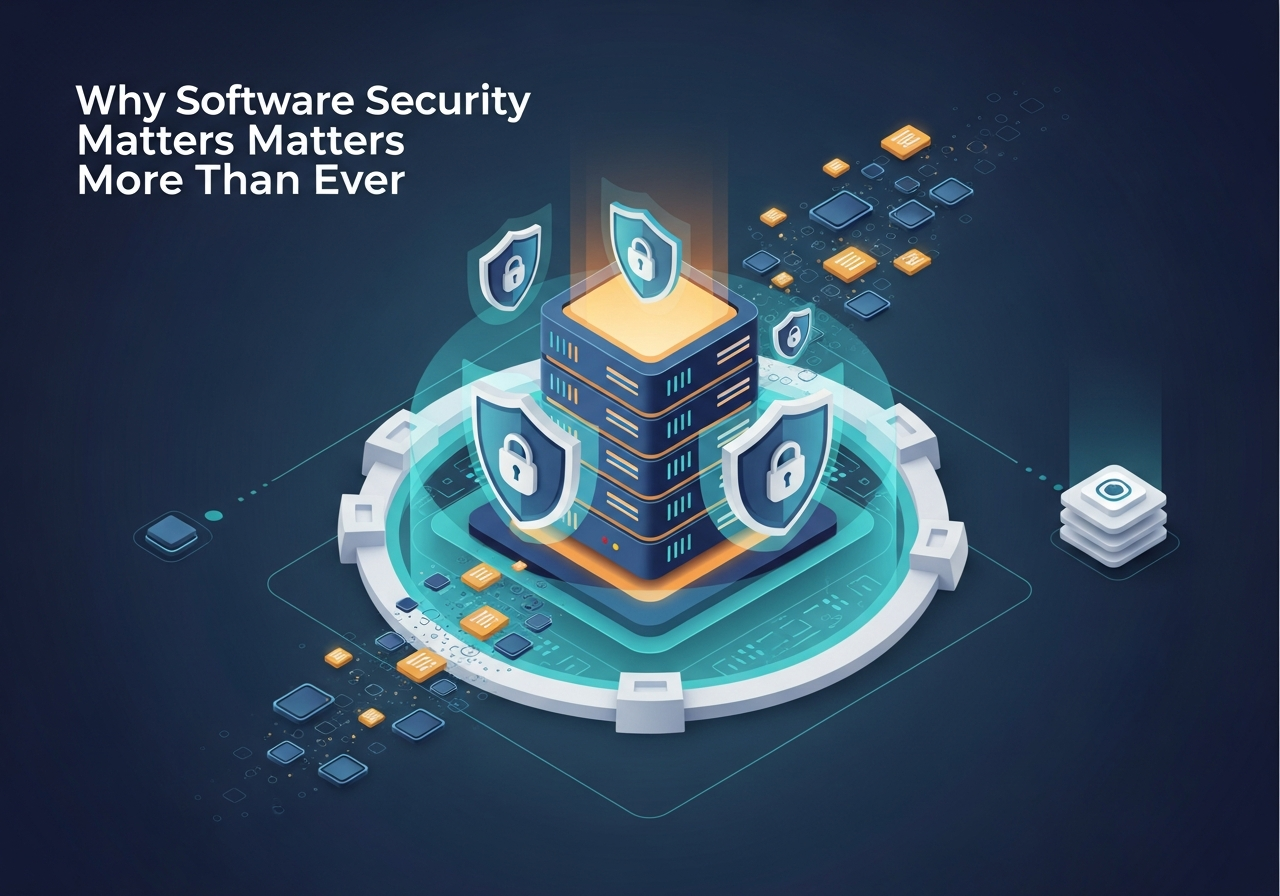
Cyber attacks are not just a problem for big corporations. Small and medium businesses are increasingly targeted because they often have weaker defenses. A single data breach can cost thousands in recovery, damage your reputation, and even put you on the wrong side of data protection regulations.
According to the OWASP Foundation, many of the most common software vulnerabilities are preventable with good development practices. Things like injection attacks, broken authentication, and sensitive data exposure can all be avoided when security is treated as a priority from day one.
In Oman, businesses handling personal data, healthcare records, or financial information need to be especially careful. Regulations around data protection are tightening across the GCC, and having secure software is becoming a business requirement, not just a technical one.
Essential Security Practices for Business Software
Secure Authentication and Access Control
Every application needs a solid authentication system. This means strong password requirements, multi-factor authentication where possible, and role-based access control that limits what each user can see and do.
Not everyone in your organization needs access to everything. A well-designed access control system ensures that employees only see the data relevant to their role. This reduces the risk of both accidental exposure and intentional misuse.
Data Encryption
Encryption protects your data by making it unreadable to anyone who does not have the proper authorization. Data should be encrypted both in transit (when it is being sent between systems) and at rest (when it is stored in databases).
Modern development frameworks make encryption straightforward to implement. If your development team is not encrypting sensitive data by default, that is a red flag.
Regular Security Updates
Software depends on many third-party libraries and frameworks, and new vulnerabilities are discovered in these dependencies regularly. Keeping everything updated is one of the simplest and most effective security measures.
This is a key part of post-launch software maintenance. A good maintenance plan includes regular security audits and prompt patching of known vulnerabilities.
Input Validation and Sanitization
One of the most common attack methods is sending malicious data through forms, search fields, or API endpoints. Proper input validation checks every piece of data that enters the system and rejects anything that looks suspicious.
This prevents attacks like SQL injection, where an attacker tries to manipulate your database by entering harmful code into a form field. It is a basic security measure, but many applications still get it wrong.
Security by Design vs Security as an Afterthought
The most important concept in software security is building it in from the start. Trying to bolt security onto a finished application is expensive, difficult, and often incomplete.
Security by design means that every decision during the development process considers potential threats. From the database architecture to the way user sessions are managed, security should be part of every conversation.
- During requirements gathering: Identify what data is sensitive and how it needs to be protected.
- During design: Plan authentication flows, access levels, and data handling procedures.
- During development: Follow secure coding practices and use established security libraries.
- During testing: Include security testing alongside functional and performance testing.
- After launch: Monitor for threats, apply updates promptly, and conduct periodic security reviews.
Common Security Mistakes to Avoid
Some security mistakes are more common than you might think. Using default passwords, storing sensitive data in plain text, not implementing HTTPS, and skipping security testing are all issues that show up regularly, even in professional software.
Another common mistake is ignoring mobile and API security. If your application has a mobile app or exposes APIs, those entry points need the same level of protection as the main web application. Security is only as strong as its weakest link.
Choosing a Security-Conscious Development Partner
When evaluating a development company, ask specific questions about their security practices. How do they handle authentication? Do they encrypt data? How do they manage third-party dependencies? What does their testing process include?
A company that takes security seriously will have clear answers to these questions and will be happy to walk you through their approach. If they seem vague or dismissive about security, consider that a warning sign.
If your software handles sensitive information like patient records, financial data, or personal customer details, working with a partner that prioritizes security is not just advisable. It is essential.
Masirat Technology builds security into every project from the ground up. From encrypted data handling to role-based access control, we make sure your software protects your business and your customers. Whether you are building a custom web platform, a mobile application, or an industry-specific tool like Pharmasolo for pharmacy management, security is always part of the plan. Talk to a trusted development partner in Oman who gets this right.


1 Comment
Why Oman's Healthcare Sector Needs Custom Digital Solutions - Masirat Technology
April 4, 2026[…] Keeping your software secure is critical in any industry, but in healthcare, a data breach can put patient safety at risk and expose your organization to serious legal consequences. Security must be built into the software from the very first line of code. […]