



What to Expect After Your Software Goes Live: Maintenance and Support
Launching your software is a huge milestone, but it is not the end of the journey. In fact, what happens after launch is just as important as the build itself. Software maintenance and support are what keep your product running smoothly, securely, and relevant over time.
Many businesses make the mistake of thinking that once the software is live, the work is done. But software is a living product. It needs regular care, updates, and improvements to keep delivering value for your team and your users.
In this article, we will explain what software maintenance involves, why it matters, and how to plan for it from the start. If you are still in the building phase, our overview of the software development process gives you the full picture from idea to launch and beyond.
Why Software Maintenance Is Not Optional
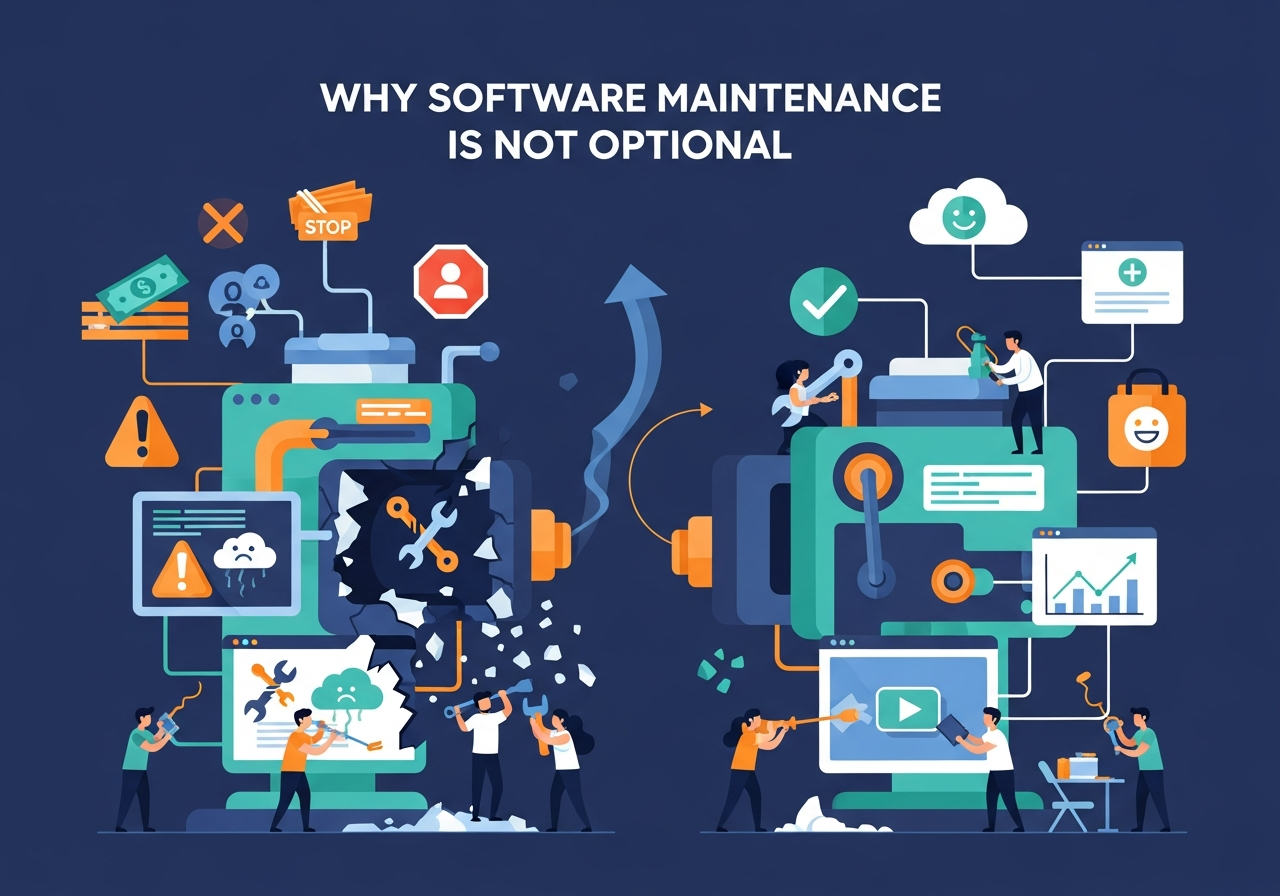
Technology moves fast. The devices your users rely on get updated. Browsers release new versions. Security threats evolve. If your software stays static while everything around it changes, problems will start to appear.
Without regular maintenance, you might experience slow performance, security vulnerabilities, compatibility issues with new devices or browsers, and frustrated users who encounter bugs that never get fixed.
The good news is that a solid maintenance plan prevents all of this. It keeps your software healthy, your users happy, and your business running without unexpected disruptions.
Types of Software Maintenance
Not all maintenance is the same. Understanding the different types helps you plan and budget for what your software will need after launch.
Bug Fixes and Corrective Maintenance
No matter how well software is tested, some issues only show up once real users start interacting with it in real-world conditions. Corrective maintenance involves identifying and fixing these bugs quickly so they do not impact the user experience.
A good development partner will have a clear process for reporting and resolving bugs, with defined response times based on the severity of the issue.
Security Updates
Security is an ongoing concern. New vulnerabilities are discovered regularly, and your software needs to be patched to stay protected. This includes updating dependencies, fixing known security holes, and monitoring for suspicious activity.
If security is a priority for your business (and it should be), our article on delivering client confidence through secure applications covers the practices that matter most.
Performance Optimization
Over time, your software may slow down as the amount of data and the number of users grows. Performance maintenance involves monitoring speed, optimizing database queries, improving load times, and ensuring the application runs smoothly at scale.
Our guide on optimizing website performance shares practical tips that apply to any web-based software.
Feature Updates and Enhancements
Your business will evolve, and your software needs to evolve with it. Feature updates involve adding new functionality, improving existing features based on user feedback, and adapting the software to meet changing business requirements.
This is where building scalable software from the start really pays off. Software designed for growth is much easier and cheaper to update than software built with a short-term mindset.
How to Plan for Post-Launch Support
The best time to plan for maintenance is before the software is built. Here are some practical steps to make sure you are covered.
- Include maintenance in your budget: A common rule of thumb is to allocate 15 to 20 percent of the initial development cost annually for maintenance.
- Choose a partner who offers support: Not all development companies provide post-launch support. Make sure your partner has clear support packages and SLAs (service level agreements).
- Set up monitoring: Use tools that alert you to performance issues, downtime, or security threats before your users notice them.
- Plan regular update cycles: Schedule periodic reviews and updates rather than waiting for things to break.
What a Good Support Agreement Looks Like
When evaluating a development partner, ask about their support terms. A good agreement will include defined response times for different issue types, a clear process for requesting changes, regular maintenance windows, and transparent billing.
Some companies offer tiered support plans, such as basic (bug fixes only), standard (bug fixes plus minor updates), and premium (full ongoing development and optimization). Choose the level that matches your needs and growth plans.
If you are still selecting a partner, our article on choosing the right software development company in Oman includes tips on evaluating post-launch support offerings.
Maintenance Is an Investment, Not a Cost
It is tempting to see maintenance as an unnecessary expense, especially after you have just invested in building the software. But think of it as insurance for your investment. Regular maintenance prevents small issues from becoming expensive emergencies. It keeps your users satisfied and your operations running smoothly.
The businesses that get the most value from their software are the ones that treat it as a long-term asset, not a one-time project. With the right maintenance plan and the right development partner in Oman, your software will continue to deliver returns for years to come.
Let Masirat Help You Build What Is Next
Masirat helps businesses in Oman grow with the right mix of technology and strategy. We are a trusted SEO Expert in Oman, focused on building strong and sustainable online campaigns. As a leading software development company in Oman, we design and develop custom websites, mobile apps, and scalable digital solutions. Through Pharmasolo, our pharmacy management software in Oman, we also support healthcare businesses with smarter, more efficient operations. Partner with Masirat for reliable App & Web development in Oman backed by real experience.


