

What Is an MVP and Why Every Startup in Oman Needs One
If you are building a tech product in Oman, you have probably heard the term MVP tossed around in conversations about startups and software. But what does it actually mean, and why does it matter so much? MVP development in Oman is becoming a critical first step for startups that want to launch smart, learn fast, and grow without burning through their entire budget.
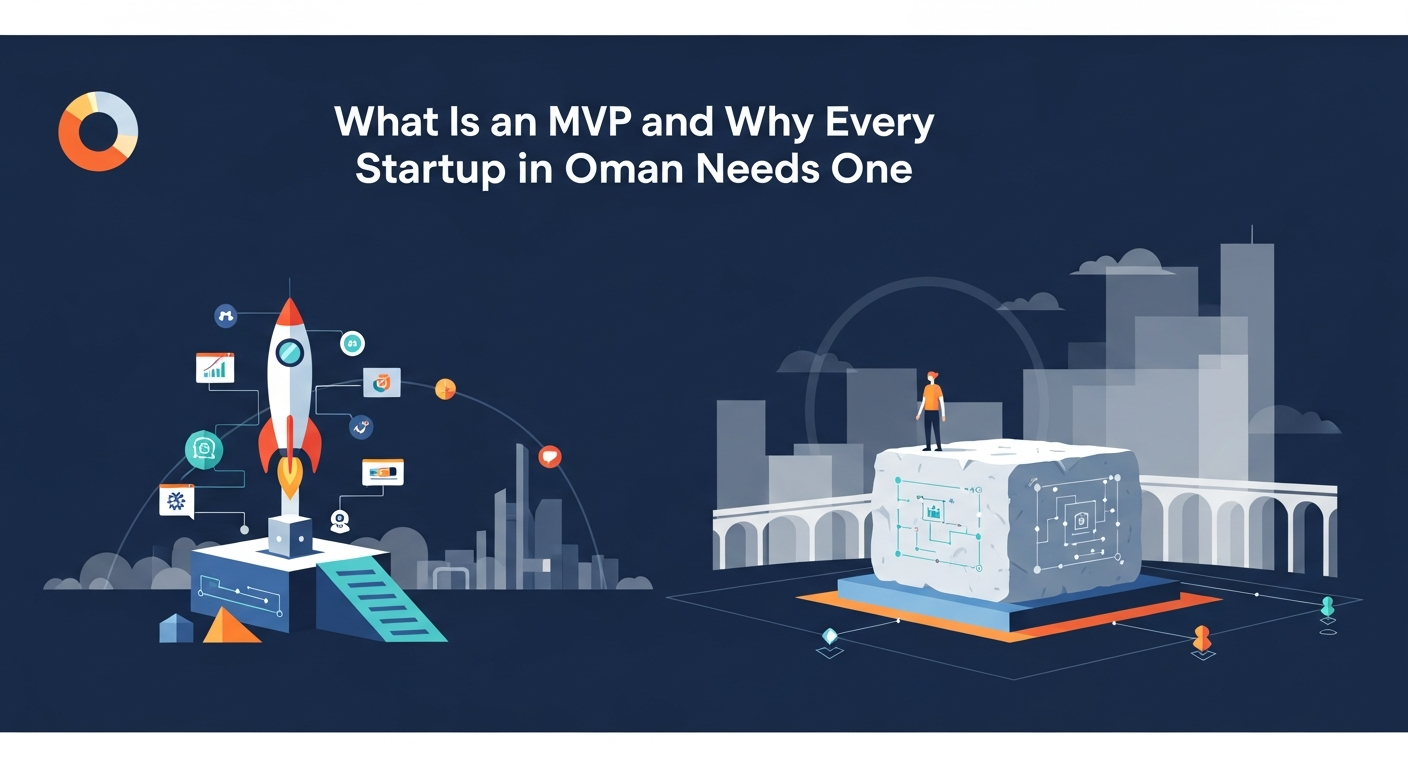
MVP stands for Minimum Viable Product. It is the simplest version of your product that still delivers value to real users. The idea is to build just enough to test your concept in the market, gather feedback, and then improve from there.
In this article, we will explain what an MVP is, why it works, and how startups in Oman can use this approach to build products that people actually want. If you are just starting to explore the development process, our guide on the software development process from idea to launch gives you the bigger picture.
What an MVP Is (and What It Is Not)
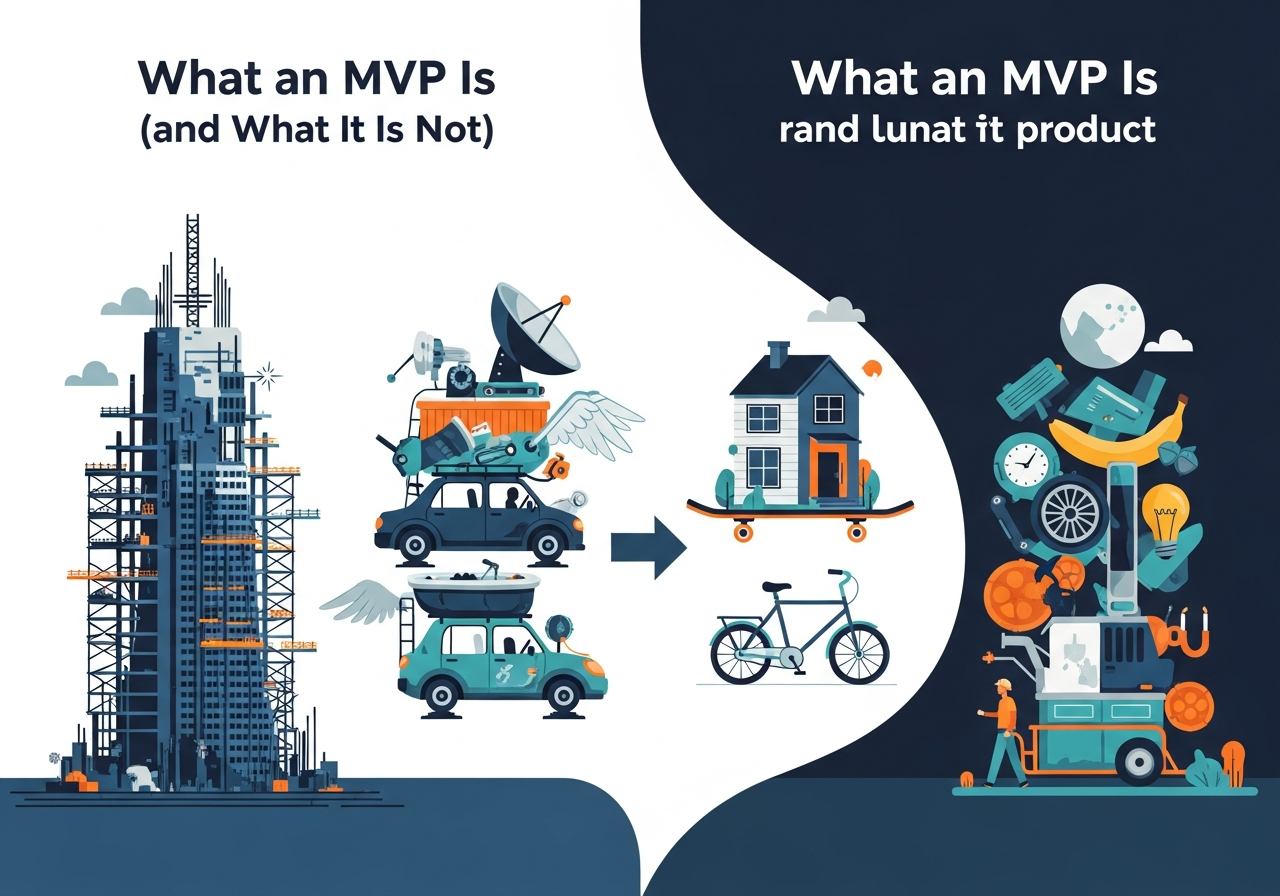
An MVP is not a half-finished product. It is not a buggy prototype that you throw out into the world and hope for the best. A good MVP is a focused, functional product that solves one core problem really well.
Think of it this way. If you are building a food delivery app, your MVP does not need a loyalty program, an AI recommendation engine, and multi-language support from day one. It needs to let customers browse restaurants, place an order, and track delivery. Everything else can come later based on what users actually ask for.
The goal of an MVP is to validate your idea with real users before investing heavily in development. It answers the most important question any startup faces: do people actually want this?
Why Startups in Oman Should Start with an MVP
The Omani startup ecosystem is growing quickly, but resources are still limited for most founders. Building a full-featured product from scratch is expensive, time-consuming, and risky. An MVP approach reduces all three of those risks.
It Saves Money
Instead of spending months and a large budget building every feature you can imagine, an MVP focuses your investment on the features that matter most. This means you can launch sooner and start generating revenue (or attracting investors) while continuing to build.
For a detailed look at how to manage costs, our FAQ on custom software development costs in Oman is a helpful resource.
It Saves Time
A full product might take six months to a year to build. An MVP can often be ready in six to twelve weeks, depending on complexity. Getting to market faster gives you a head start over competitors who are still planning.
It Reduces Risk
The biggest risk in any startup is building something nobody wants. An MVP lets you test your assumptions with real users early on. If something is not working, you can pivot or adjust before you have invested too heavily.
How to Define Your MVP
Defining your MVP starts with understanding the core problem your product solves. Write it down in one sentence. If you cannot explain it simply, you might be trying to solve too many problems at once.
Next, list every feature you want your product to have. Then separate them into two groups: features that are essential for solving the core problem, and features that would be nice to have later. Your MVP includes only the first group.
- Must-have features: The absolute essentials that make the product usable and valuable.
- Should-have features: Important additions that improve the experience but are not critical for launch.
- Nice-to-have features: Things that can wait for version two or three.
This prioritization process works hand in hand with a good software requirements document. Documenting your requirements clearly makes it much easier for your development team to build the right thing.
Real Examples of Successful MVPs
Some of the biggest tech companies in the world started with simple MVPs. Airbnb started as a basic website with photos of the founders’ apartment and an air mattress. Dropbox launched with a simple explainer video before building the actual product. These companies used their MVPs to prove demand before scaling.
In Oman, the same principle applies across industries. A logistics startup might launch with a simple route optimization tool before adding fleet management and analytics. A healthcare platform might start with online appointment booking before expanding into patient records and billing.
The key takeaway is that your first version does not need to be perfect. It just needs to work well enough to prove that your idea has potential.
From MVP to Full Product
Once your MVP is in the hands of real users, the learning begins. Pay close attention to how people use it, what features they ask for, and where they get stuck. This feedback becomes the roadmap for your next version.
The transition from MVP to full product should be gradual and data-driven. Add features one at a time, test each addition, and keep talking to your users. This approach keeps your product focused and avoids the bloat that comes from building features nobody uses.
If you are a startup founder in Oman looking to take this journey, our article on going from idea to app store walks you through the full path from concept to launch. And when you are ready to start building, working with a trusted software development partner in Oman makes the process much smoother.
Let Masirat Help You Build What Is Next
Masirat helps businesses in Oman grow with the right mix of technology and strategy. We are a trusted SEO Expert in Oman, focused on building strong and sustainable online campaigns. As a leading software development company in Oman, we design and develop custom websites, mobile apps, and scalable digital solutions. Through Pharmasolo, our pharmacy management software in Oman, we also support healthcare businesses with smarter, more efficient operations. Partner with Masirat for reliable App & Web development in Oman backed by real experience.


1 Comment
How Startups in Oman Can Build Tech Products on a Budget - Masirat Technology
April 8, 2026[…] single most important budget decision you will make is choosing to build an MVP, or minimum viable product. An MVP is the simplest version of your product that delivers real value to […]