


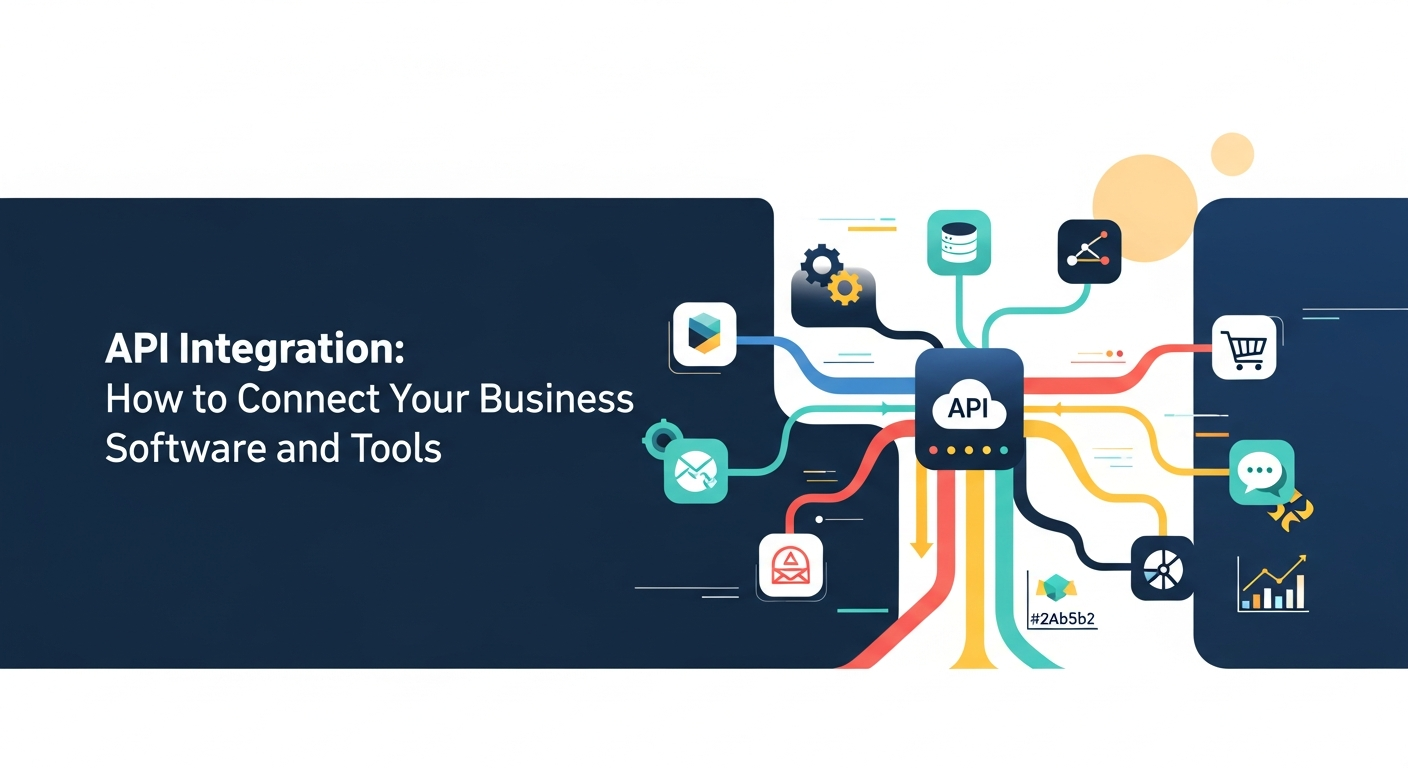
API Integration: How to Connect Your Business Software and Tools
Your business probably uses more software tools than you realize. You might have one system for accounting, another for customer management, a third for inventory, and maybe a few more for email marketing or project tracking. When these tools do not talk to each other, your team ends up doing a lot of manual work to keep everything in sync. That is where API integration comes in.
API stands for Application Programming Interface. In simple terms, it is the technology that allows different software systems to communicate and share data with each other automatically. When done right, API integration eliminates duplicate data entry, reduces errors, and gives your team a more complete picture of your business.
In this article, we will explain how API integration works, why it matters for your business, and how to approach it the right way. If you are building new software and want integrations planned from the start, our overview of the software development process covers how this fits into the bigger picture.
How API Integration Works (in Plain Language)
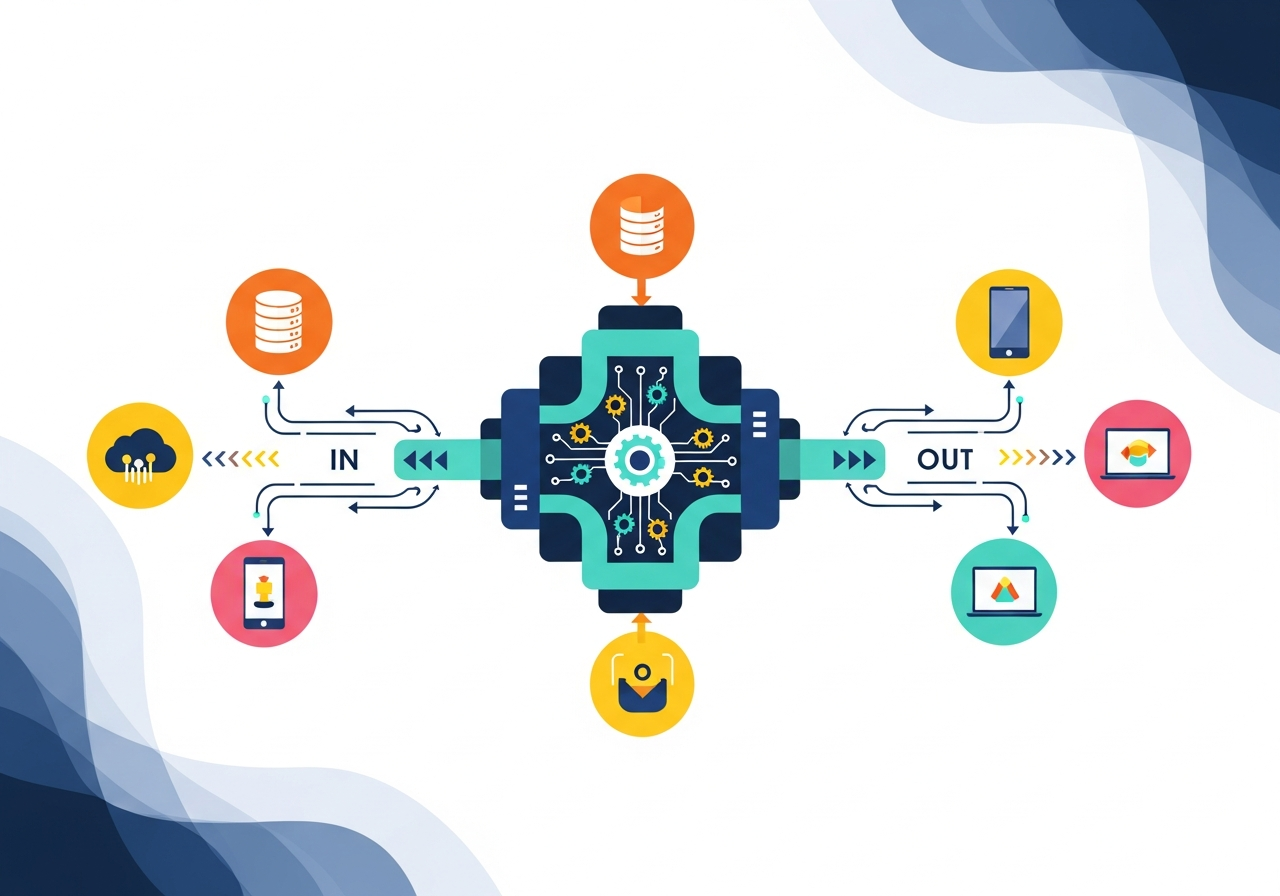
Think of an API as a waiter in a restaurant. You (the software) place an order (a request) through the waiter (the API), and the waiter brings back your food (the data) from the kitchen (the other software system). You do not need to know how the kitchen works. You just need the waiter to take your order and deliver the result.
In practice, this means your e-commerce platform can automatically send order data to your accounting software. Or your CRM can pull customer information from your website forms without anyone copying and pasting anything. The possibilities are almost endless once your systems can talk to each other.
Most modern software tools come with APIs that allow developers to build these connections. Some integrations are simple and can be set up in hours. Others require more custom work, especially when connecting older systems or building complex workflows.
Common Business Integrations That Save Time
Here are some of the most impactful integrations businesses in Oman are using today.
Accounting and Sales
Connecting your sales or e-commerce platform to your accounting software means invoices, payments, and tax calculations happen automatically. No more manual data entry at the end of each day.
CRM and Email Marketing
When your customer relationship management tool talks to your email marketing platform, new leads automatically enter the right email sequences. Customer data stays consistent across both systems without anyone lifting a finger.
Inventory and E-Commerce
For retail businesses, keeping inventory levels accurate across your online store and physical location is critical. API integration makes this happen in real time, preventing overselling and stock confusion. Our article on common e-commerce mistakes highlights how poor integration is one of the biggest pitfalls for online stores.
HR and Payroll
Connecting your HR system with payroll software automates salary calculations, leave tracking, and compliance reporting. This saves hours of manual work every pay cycle and reduces the risk of errors.
Planning Your Integration Strategy
Before connecting everything to everything, take a step back and plan. Not every integration is equally valuable, and trying to do too much at once can create more problems than it solves.
- Identify your pain points: Where is your team spending the most time on manual data transfer? Start there.
- Check API availability: Make sure the tools you want to connect actually offer APIs. Most modern software does, but some older systems may not.
- Think about data flow: Map out which system is the “source of truth” for each type of data. This prevents conflicts and duplicate records.
- Plan for errors: What happens when an API call fails? Good integration design includes error handling and retry logic.
- Consider security: API connections involve transferring data between systems. Make sure the integration uses proper authentication and encryption.
Custom Integrations vs Pre-Built Connectors
Some integrations can be done using pre-built connectors or middleware platforms like Zapier or Make. These tools are great for simple, standard connections, such as sending form submissions to a spreadsheet or triggering an email when a new customer signs up.
For more complex or business-specific integrations, custom development is the better path. A custom integration gives you full control over how data flows between systems, what gets synced, and how errors are handled.
If your business relies on custom software, having integrations built into the application from the start is the most efficient approach. This is something to discuss during the requirements gathering phase of your project.
Getting Integration Right
API integration is one of those things that, when done well, you barely notice it. Data flows smoothly, systems stay in sync, and your team focuses on real work instead of copying data between spreadsheets.
When done poorly, it creates a mess. Duplicate records, missing data, and broken workflows that are harder to fix than the original manual process. The difference comes down to planning and expertise.
Working with a development team that has real experience in building scalable, well-integrated software makes all the difference. The right partner will help you design an integration strategy that grows with your business instead of becoming a bottleneck.
Masirat Technology specializes in building connected digital solutions for businesses in Oman. From custom web platforms to mobile applications, we build software that works together seamlessly. As a software development company in Oman, we understand the local business landscape, and our Pharmasolo pharmacy software is a prime example of an integrated solution built for a specific industry.


1 Comment
How Retail Businesses in Oman Can Benefit from Custom Software - Masirat Technology
April 2, 2026[…] not necessarily need to replace everything you are already using. Custom software can be built to integrate with your existing tools through APIs. Your current accounting software, payment gateway, or shipping provider can all […]